 The EUREQA dataset
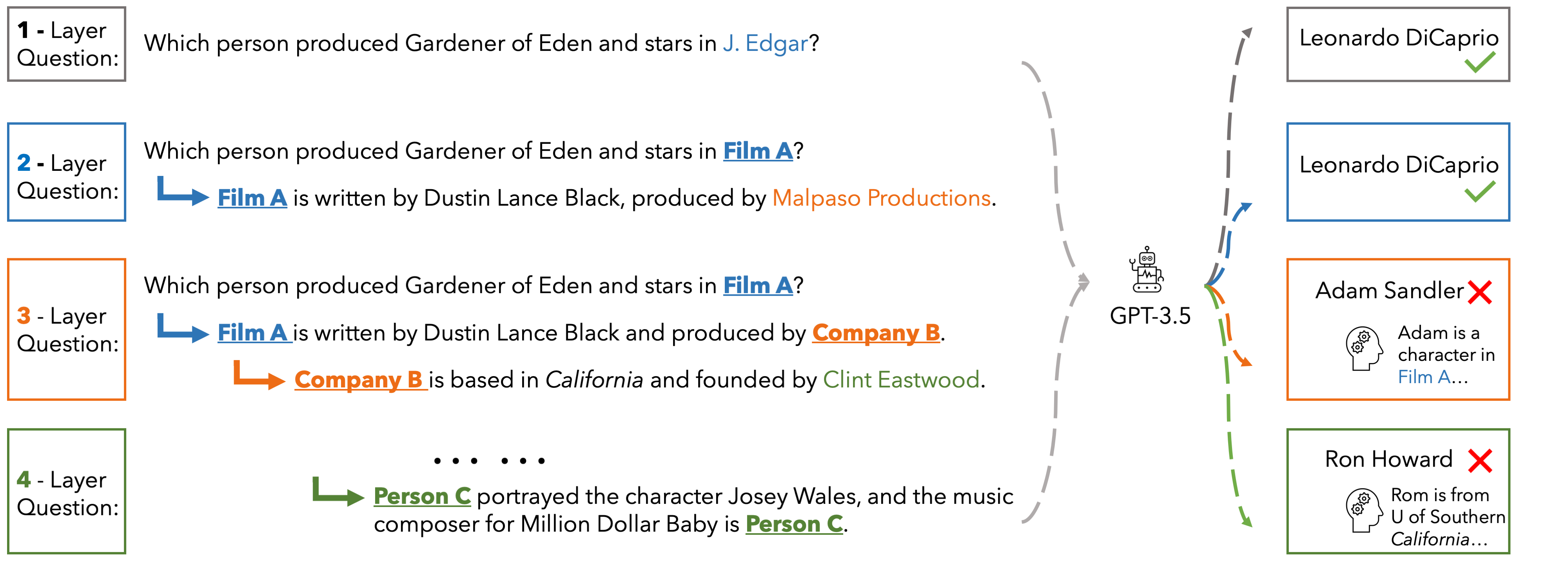
In EUREQA, every question is constructed through an implicit reasoning chain. The chain is constructed by parsing DBPedia. Each layer comprises three components: an entity, a fact about the entity, and a relation between the entity
and its counterpart from the next layer. The layers stack up to create chains with different depths of reasoning. We verbalize reasoning chains into natural sentences and anonymize the entity of each layer to create the question.
Questions can be solved layer by layer and each layer is guaranteed a unique answer. EUREQA is not a knowledge game: we adopt a knowledge filtering process that ensures that most LLMs have sufficient world knowledge to answer our questions.
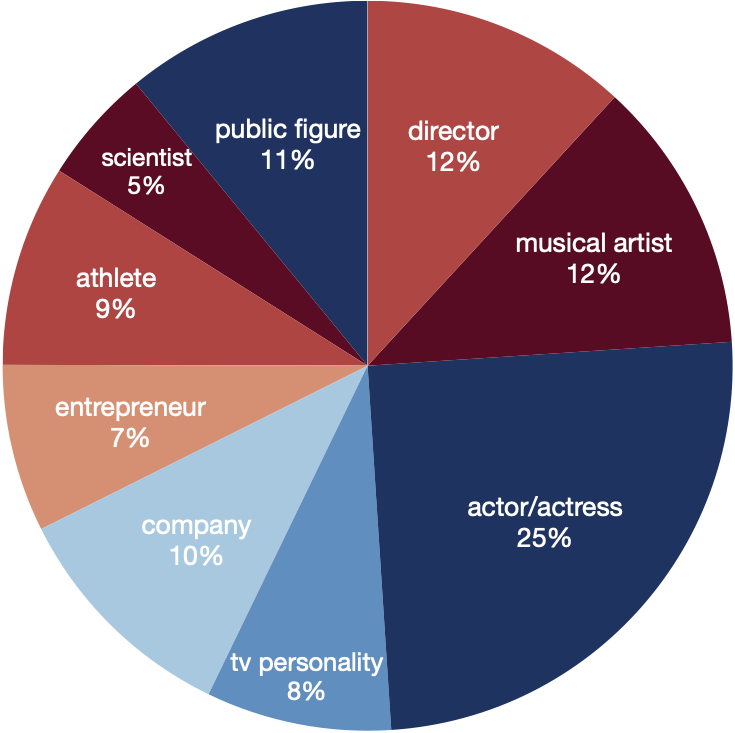
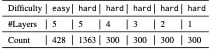
EUREQA comprises a total of 2,991 questions of different reasoning depths and difficulties. The entities encompass a broad spectrum of topics, effectively reducing any potential bias arising from specific entity categories.
These data are great for analyzing the reasoning processes of LLMs
From the gentle swing of a pendulum to the complex autopilot system of a commercial drone, dynamic systems are everywhere. For engineering students, the textbook Modeling and Analysis of Dynamic Systems (commonly by Close, Frederick, and Newell, or similar authors like Palm and Ogata) is often the gatekeeping course between freshman physics and real-world control systems engineering.
The curriculum generally covers three pillars:
Searching for a free PDF on torrent sites or file-sharing forums is risky (malware, expired licenses, and poor OCR scans). Instead, consider these legal routes:
A solution manual demonstrates how to apply this logic consistently across different domains. How to Use a Solution Manual Effectively
: Deriving differential equations from physical laws (e.g., Newton's laws for mechanical systems or Kirchhoff's laws for electrical circuits) .
Given the ethical and legal challenges of PDFs, what are the modern alternatives?
Finding a comprehensive is essential for mastering how physical systems (mechanical, electrical, thermal, and fluid) behave over time .
 Analyses and discussion
From the gentle swing of a pendulum to the complex autopilot system of a commercial drone, dynamic systems are everywhere. For engineering students, the textbook Modeling and Analysis of Dynamic Systems (commonly by Close, Frederick, and Newell, or similar authors like Palm and Ogata) is often the gatekeeping course between freshman physics and real-world control systems engineering.
The curriculum generally covers three pillars:
Searching for a free PDF on torrent sites or file-sharing forums is risky (malware, expired licenses, and poor OCR scans). Instead, consider these legal routes:
A solution manual demonstrates how to apply this logic consistently across different domains. How to Use a Solution Manual Effectively
: Deriving differential equations from physical laws (e.g., Newton's laws for mechanical systems or Kirchhoff's laws for electrical circuits) .
Given the ethical and legal challenges of PDFs, what are the modern alternatives?
Finding a comprehensive is essential for mastering how physical systems (mechanical, electrical, thermal, and fluid) behave over time .
This website is adapted from Nerfies, UniversalNER and LLaVA, licensed under a Creative Commons Attribution-ShareAlike 4.0 International License. We thank the LLaMA team for giving us access to their models.
Usage and License Notices: The data abd code is intended and licensed for research use only. They are also restricted to uses that follow the license agreement of LLaMA, ChatGPT, and the original dataset used in the benchmark. The dataset is CC BY NC 4.0 (allowing only non-commercial use) and models trained using the dataset should not be used outside of research purposes.