Thank you

A Product Trainer will contact you within two business days to schedule a one-on-one training session.
Draft Review – Hellraiser (1987, 720p) Source: FilmyFly / Filmy4wap / Filmywap (download link omitted)
TL;DR A groundbreaking horror entry that blends visceral gore with philosophical terror, Hellraiser remains a stylish, unsettling masterpiece of the late‑80s. Its inventive practical effects, unforgettable antagonist (Pinhead), and the nightmarish mythology of the Cenobites set a high bar for the genre, even if its pacing and character depth feel dated by today’s standards.
1. Synopsis (Spoiler‑Free) Clive Barker’s directorial debut follows puzzle‑box collector Frank Cotton (Sean Chapman) who unlocks a portal to a realm of sadistic extra‑dimensional beings—the Cenobites—by solving the Lament Configuration. After a gruesome encounter, Frank’s brother Larry (Nicholas Vince) and his wife Katherine (Ashley Laurence) become entangled in a desperate race to keep the box out of the hands of their teenage niece Jill (Jenna Russell) and her friend Frank (Andrew Robinson). The film spirals into a nightmarish showdown where pain and pleasure blur into a single, terrifying experience.
2. Visual & Technical Elements | Element | Assessment | |---------|------------| | Resolution & Transfer | The 720p rip retains the original 1.85:1 aspect ratio, delivering crisp detail on the film’s gritty set pieces and practical makeup. Grain is present but authentic to the era; a mild denoise filter can smooth it without losing texture. | | Cinematography | Robin Vidgeon’s camera work employs low, angled lighting to give the Cenobites an almost sculptural presence. The use of chiaroscuro amplifies the claustrophobic feel of the underground labyrinth. | | Production Design | The contrast between the suburban home and the industrial “hellish” chambers underlines the film’s theme of hidden darkness beneath everyday life. | | Practical Effects | The gore is largely practical—foam latex, blood packs, and clever puppetry. The iconic “hand‑hook” scene and the dismemberment sequences still hold up as visceral, tactile horror. | | Sound & Score | Christopher Young’s synth‑driven score is hauntingly melodic, building tension with an almost operatic quality. The sound design (creaking chains, metallic clangs) works hand‑in‑hand with the visuals to heighten dread. | Draft Review – Hellraiser (1987, 720p) Source: FilmyFly
3. Performances
Doug Bradley (Pinhead / The Lead Cenobite) – Bradley’s stoic, almost reverent delivery makes Pinhead a chillingly charismatic figure. His measured cadence and the subtle facial scarification give the character an unsettling gravitas that has become iconic. Sean Chapman (Frank Cotton) – Delivers a flamboyant, reckless energy that fuels the film’s initial chaos. While his performance is intentionally over‑the‑top, it serves as a perfect foil for the cold logic of the Cenobites. Ashley Laurence (Katherine) – Provides the emotional core; her transition from helpless victim to fierce survivor feels genuine despite limited screen time. Nicholas Vince (Larry) – Offers a solid, grounded presence, embodying the every‑man who must confront the supernatural. Jenna Russell & Andrew Robinson (Jill & Frank) – Their teen‑drama dialogue feels dated, yet their earnestness helps ground the narrative’s more fantastical elements.
4. Themes & Subtext
Pleasure vs. Pain – The Cenobites embody the philosophical question: where does pleasure end and pain begin? The film blurs those lines, suggesting that the pursuit of extreme sensation can lead to self‑destruction. Forbidden Curiosity – Frank’s obsession with the Lament Configuration mirrors humanity’s dangerous curiosity—opening doors we are not prepared to walk through. Duality of Reality – The juxtaposition of a banal suburban setting with a nightmarish underworld underscores the thin veneer separating normalcy from horror. Transgression and Punishment – The Cenobites act as cosmic arbiters, punishing those who transgress moral and metaphysical boundaries.
5. Strengths
Original Mythology – Unlike many contemporaries that borrowed from existing folklore, Hellraiser introduces a wholly original pantheon (the Cenobites) and a compelling cosmology. Iconic Villain – Pinhead’s design (the nail‑studded head, precise speech) has become a cultural touchstone, influencing horror aesthetics for decades. Practical Gore – The film’s reliance on physical effects gives its violence a tangible, unsettling quality that CGI often fails to replicate. Atmospheric Direction – Barker’s background as a writer shines through in his meticulous world‑building and pacing; he lets the dread breathe rather than rushing to cheap scares. a few (e.g.
6. Weaknesses
Pacing in the Mid‑Section – After the opening gore set‑piece, the story slows while the teenage subplot unfolds, potentially losing audience momentum. Character Development – Many characters serve primarily as narrative devices; their motivations are thin, making it harder to emotionally invest beyond the central horror. Special Effects Aging – While many practical effects hold up, a few (e.g., the “blood‑splatter” in the kitchen) reveal their 1980s origins, which can feel dated on a high‑definition screen. Dialogue – Certain lines, especially from the teenage characters, feel clichéd and may detract from the otherwise sophisticated script.
A Product Trainer will contact you within two business days to schedule a one-on-one training session.
We’ve received your request for technical support. A Technical Support Specialist will contact you within 1 business day.
Your Target Market Request form has been sent. Your SocialCRM support agent will contact you to discuss any specifics, if needed.
Thank you for your interest in Mitchell 1 products. A Customer Service Agent will contact you within 1 business day.
Please allow 30 business days for your request to be processed.
We’ve received your request for assistance with your Mitchell 1 account. A Customer Service Agent will contact you within 1 business day.
We’ve received your request for a call back. A Customer Service Agent will contact you within 1 business day.
Thank you for contacting Mitchell 1 to discuss data integration opportunities. Clients who meet the requirements will be contacted to discuss a potential opportunity.
Your upgrade request for Accounting Link has been received. A Customer Service agent will contact you shortly.
Your details have been successfully submitted!
Direct Access—Pass-Through (transfer ticket) streamlines access straight into ProDemand Truck. Depending on the configuration, this workflow uses the user/password credentials or an account number. Your users can launch into ProDemand Truck, assuming they already have an active subscription.
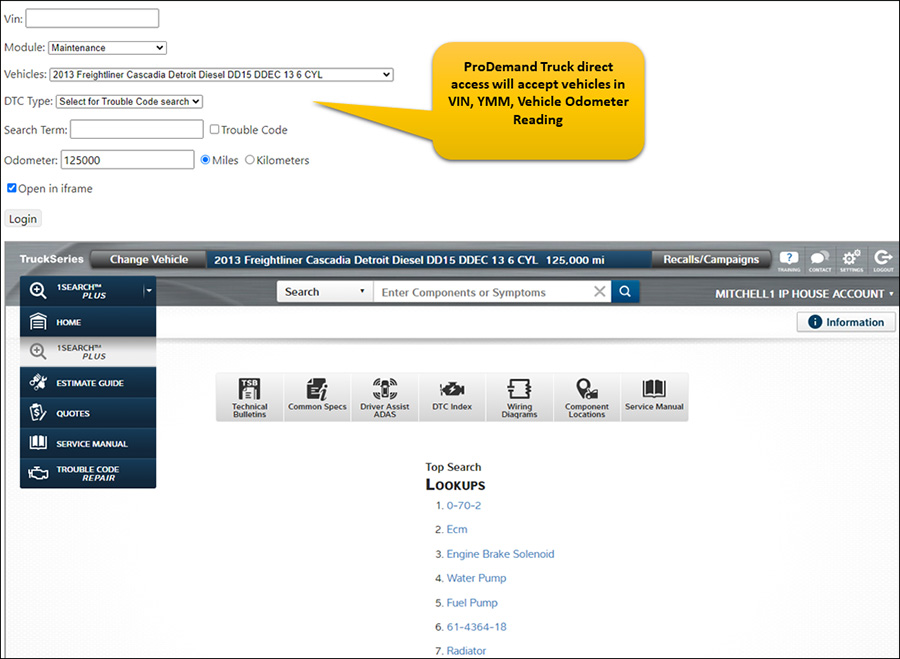
ProDemand Medium and Heavy-Duty Truck Class 4-8 has the following mechanisms for application-level integration with our repair content: (Labor)
Your users can launch the ProDemand Medium & Heavy-Duty Truck UI sub-sections, assuming they already have an active subscription.
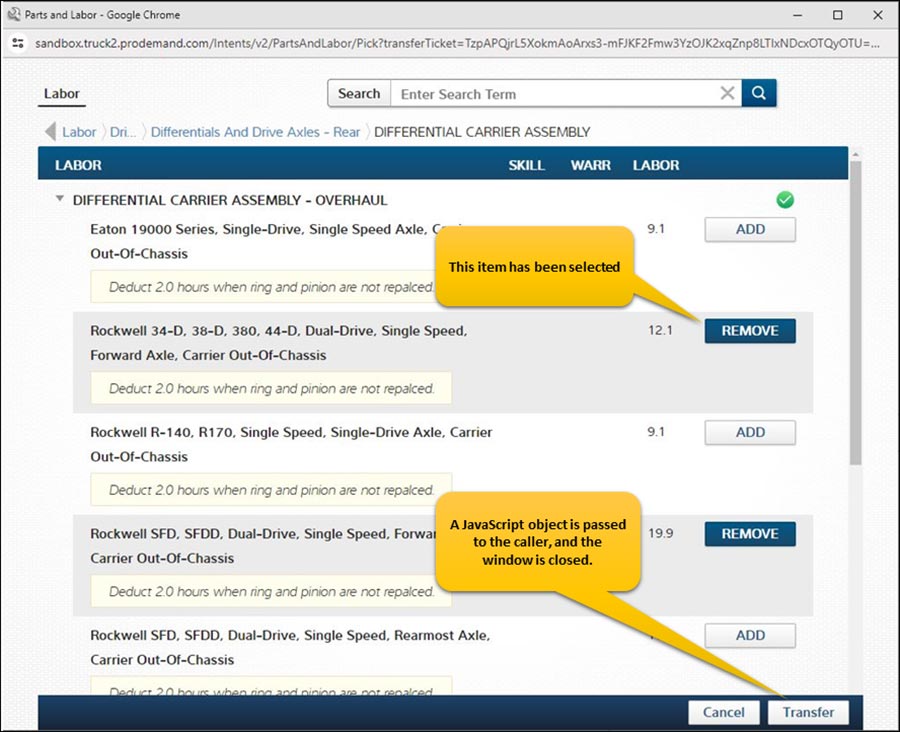
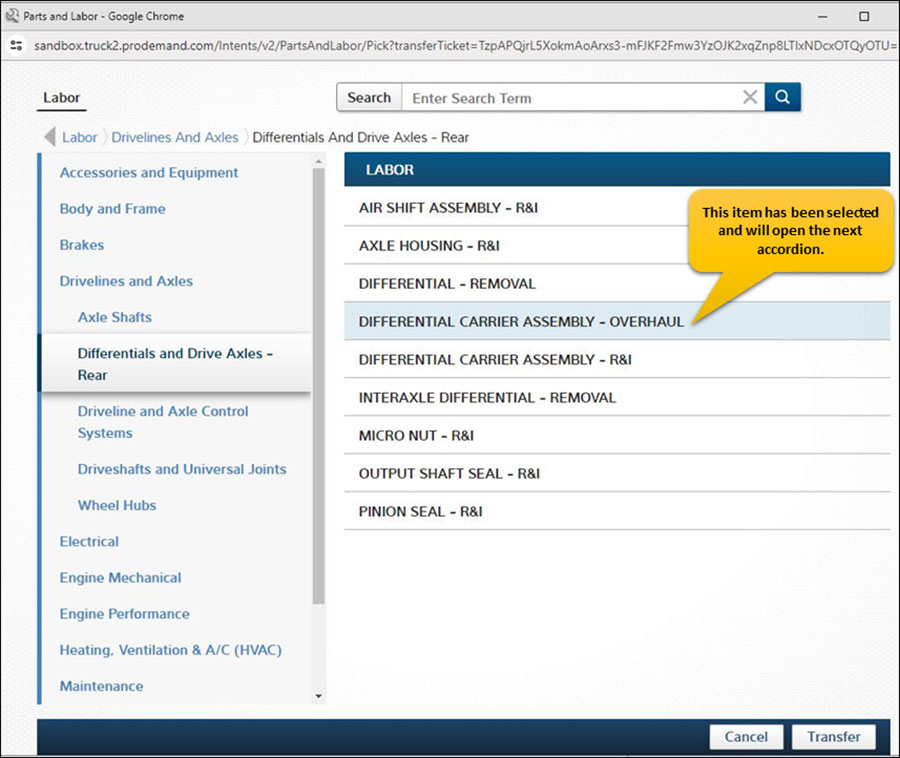
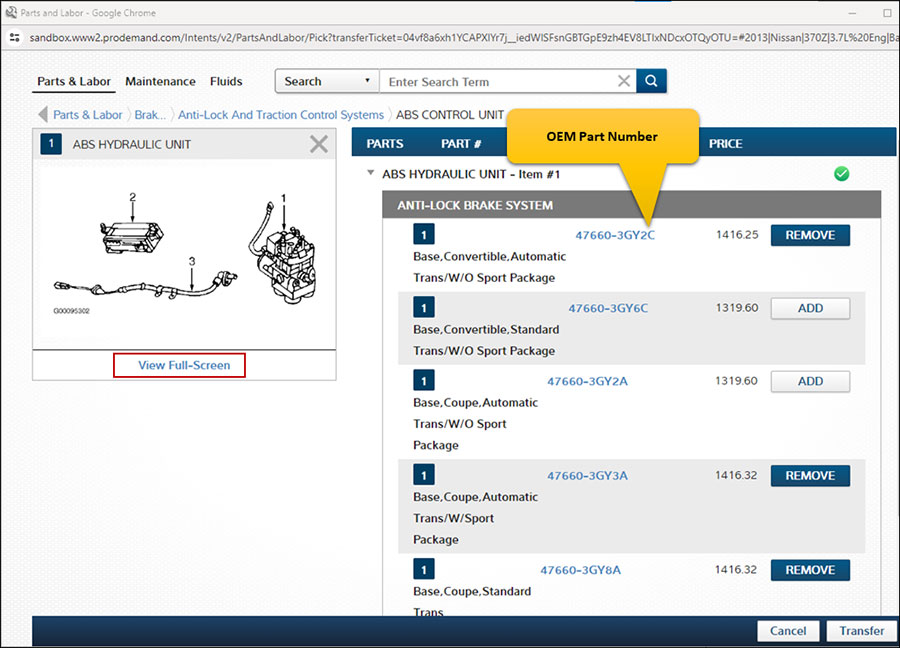
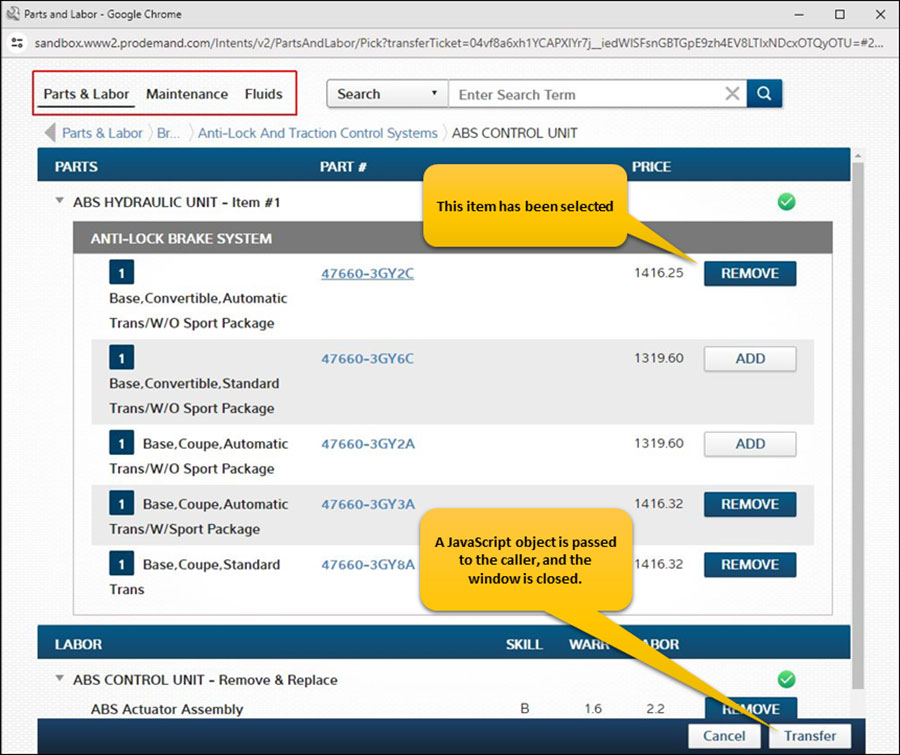
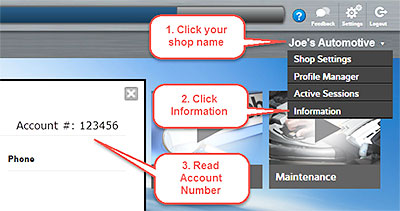
Direct Access—Pass-Through (transfer ticket) streamlines access straight into ProDemand. Depending on the configuration, this workflow uses the user/password credentials or an account number. Your users can launch into ProDemand, assuming they already have an active subscription.
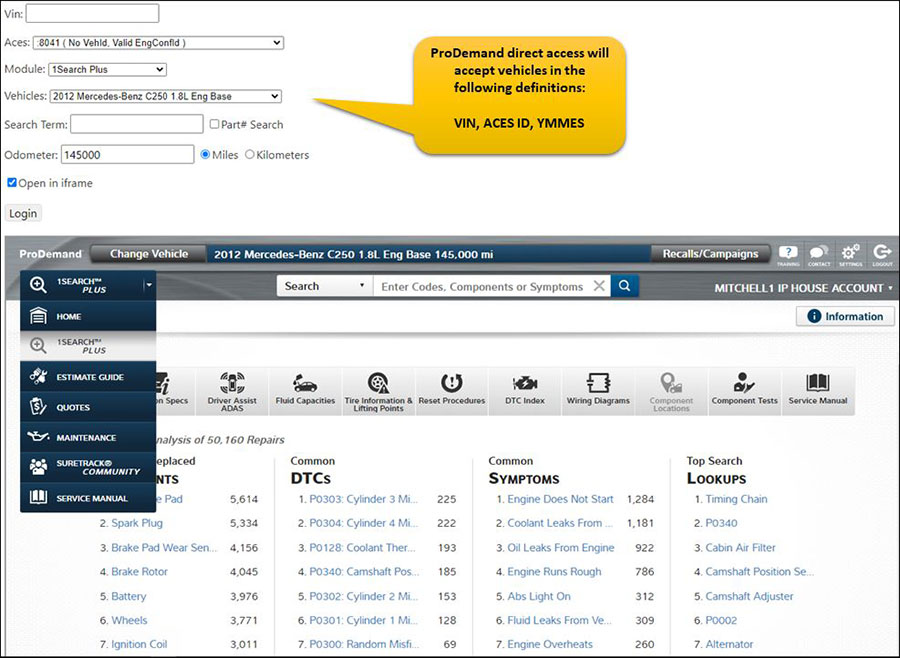
ProDemand Light Duty Automotive has the following mechanisms for application-level integration with our repair content: (Labor, Parts, Fluids, and Maintenance) Your users can launch the ProDemand Light Duty UI sub-sections, assuming they already have an active subscription.