Get full access to Xogot for one year—completely free.
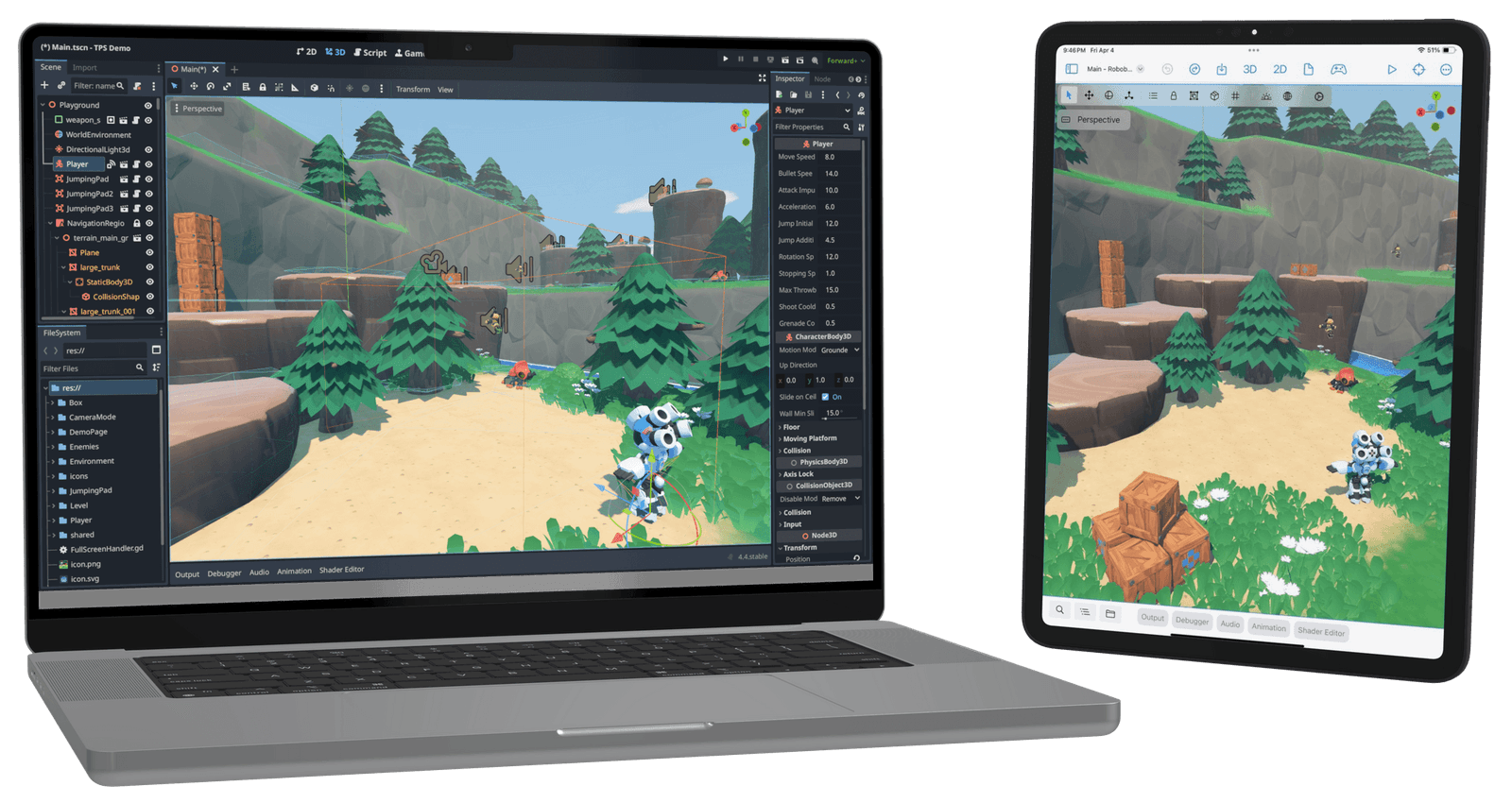
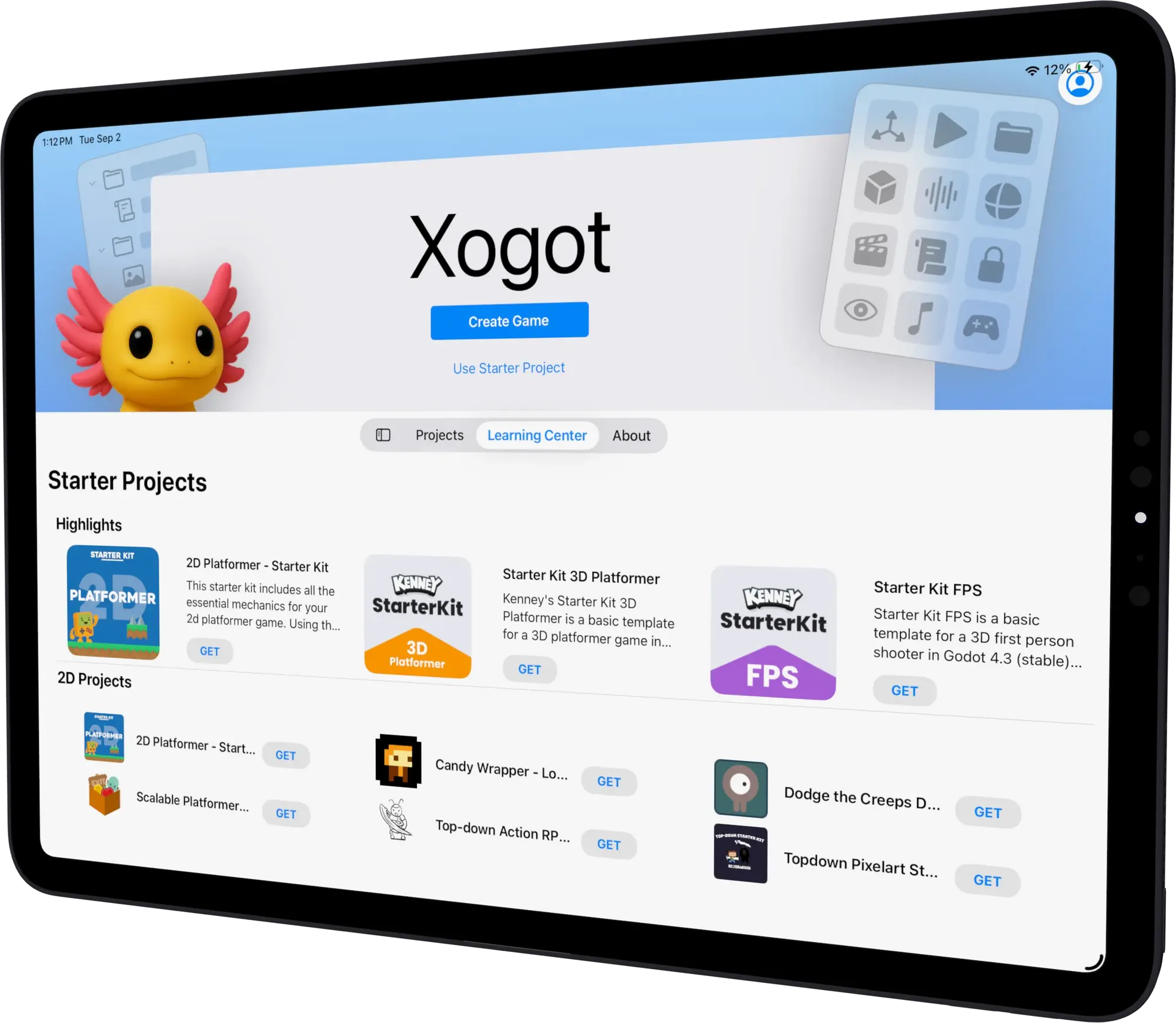
Bring worlds to life with Godot's powerful 3D tools, including a comprehensive scene system, advanced lighting, and flexible scripting
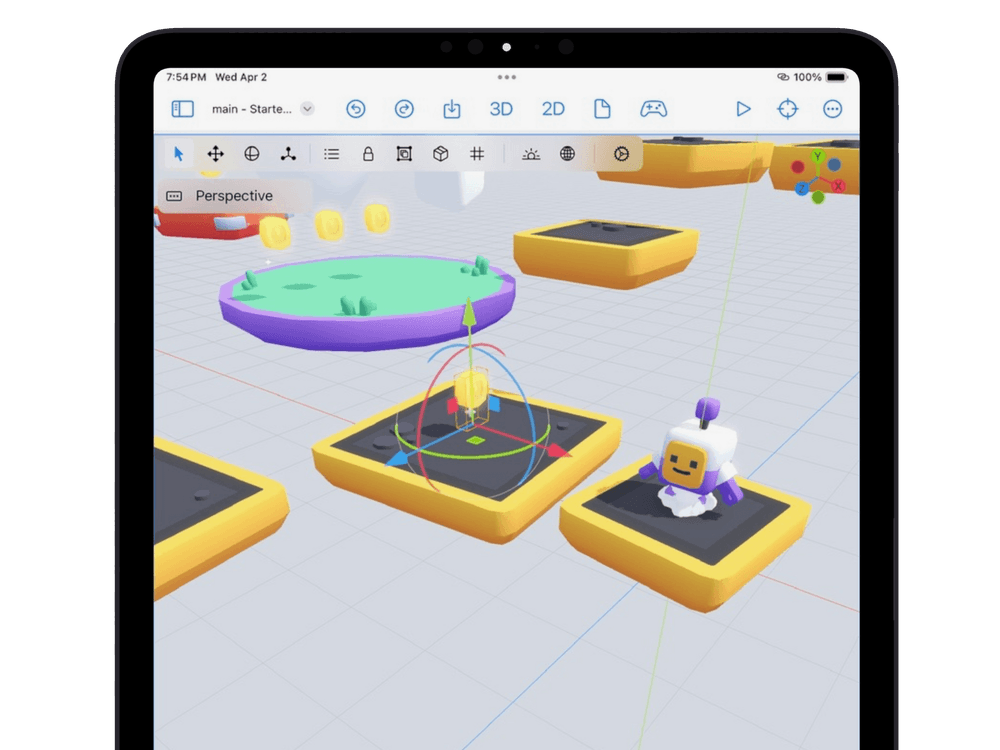
Create games that pop with approachable 2D game development tools including tile map editor, scalable layout, and a dedicated 2D pipeline
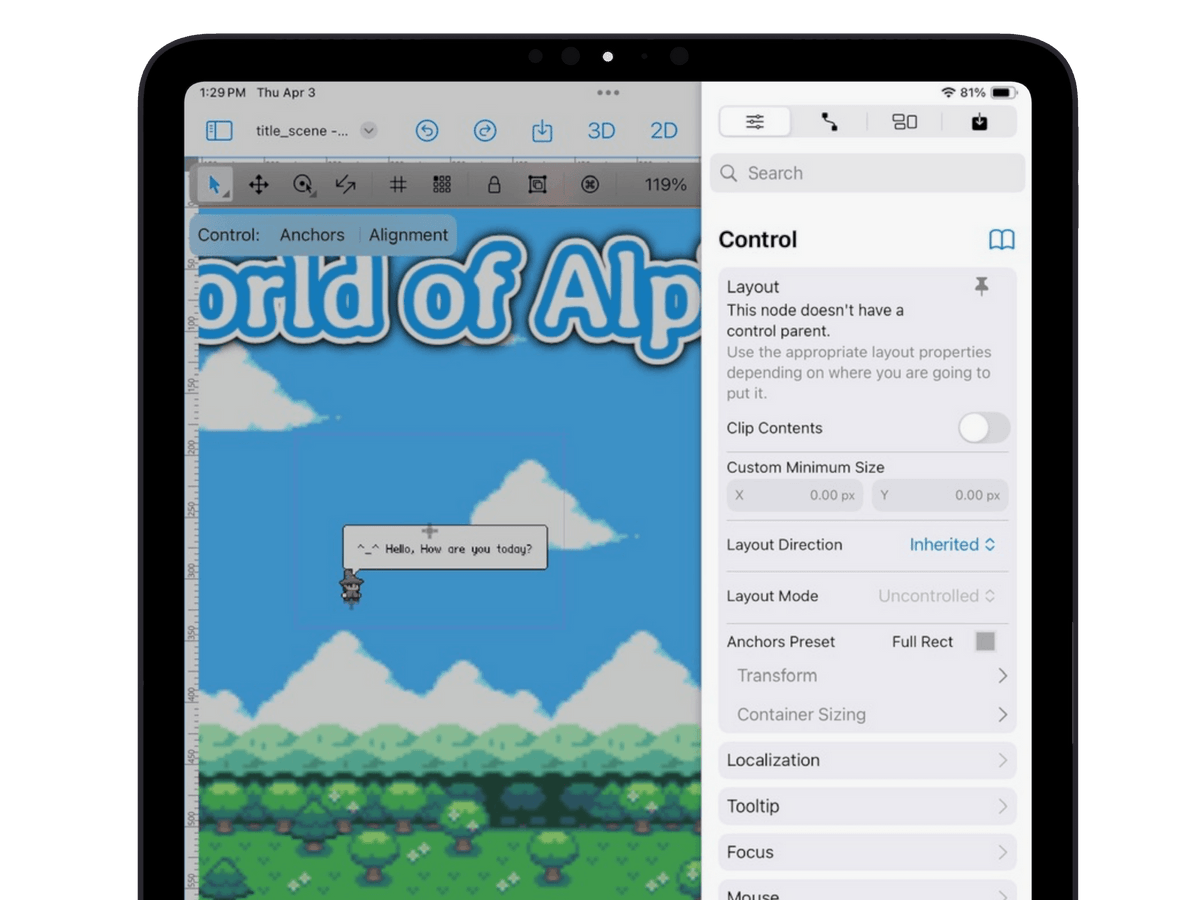
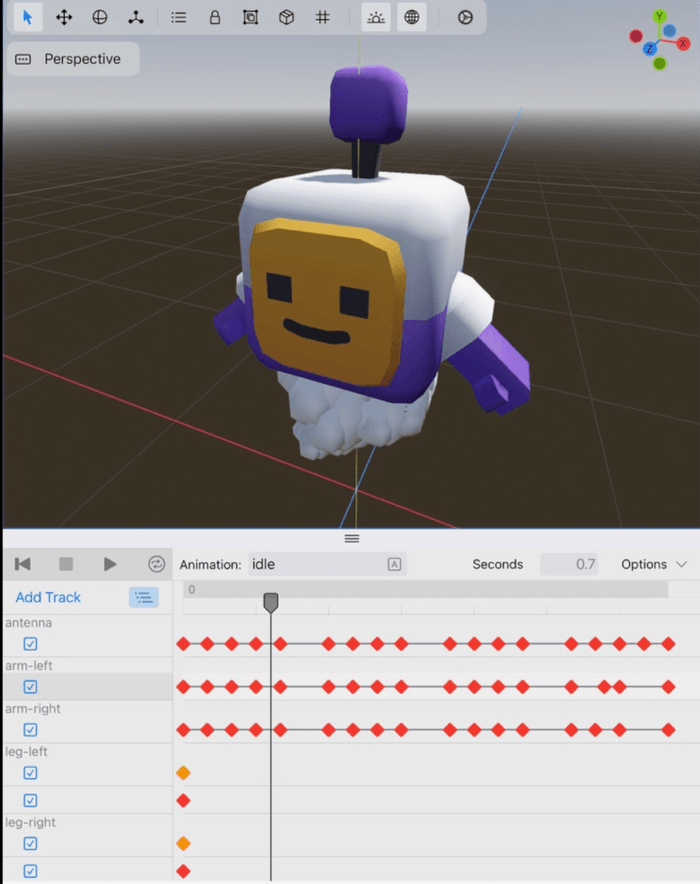
Animate characters, UI, and more with timeline-editing built for touch
Select and inspect scene nodes - and interact with the editor - while running the game
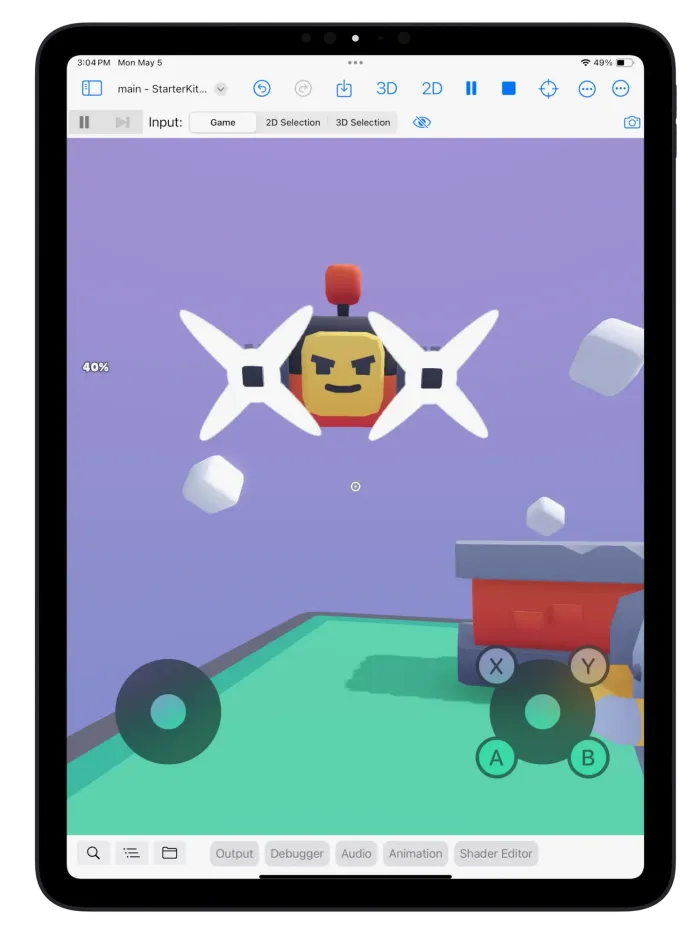
Powered by Godot, the powerful, and popular, open source game engine, distribute your games with a runtime that is not encumbered by commercial redistribution restrictions

Built for Touch
Xogot embraces iPad and iOS conventions to give you a smooth, native experience that feels right at home on your favorite device
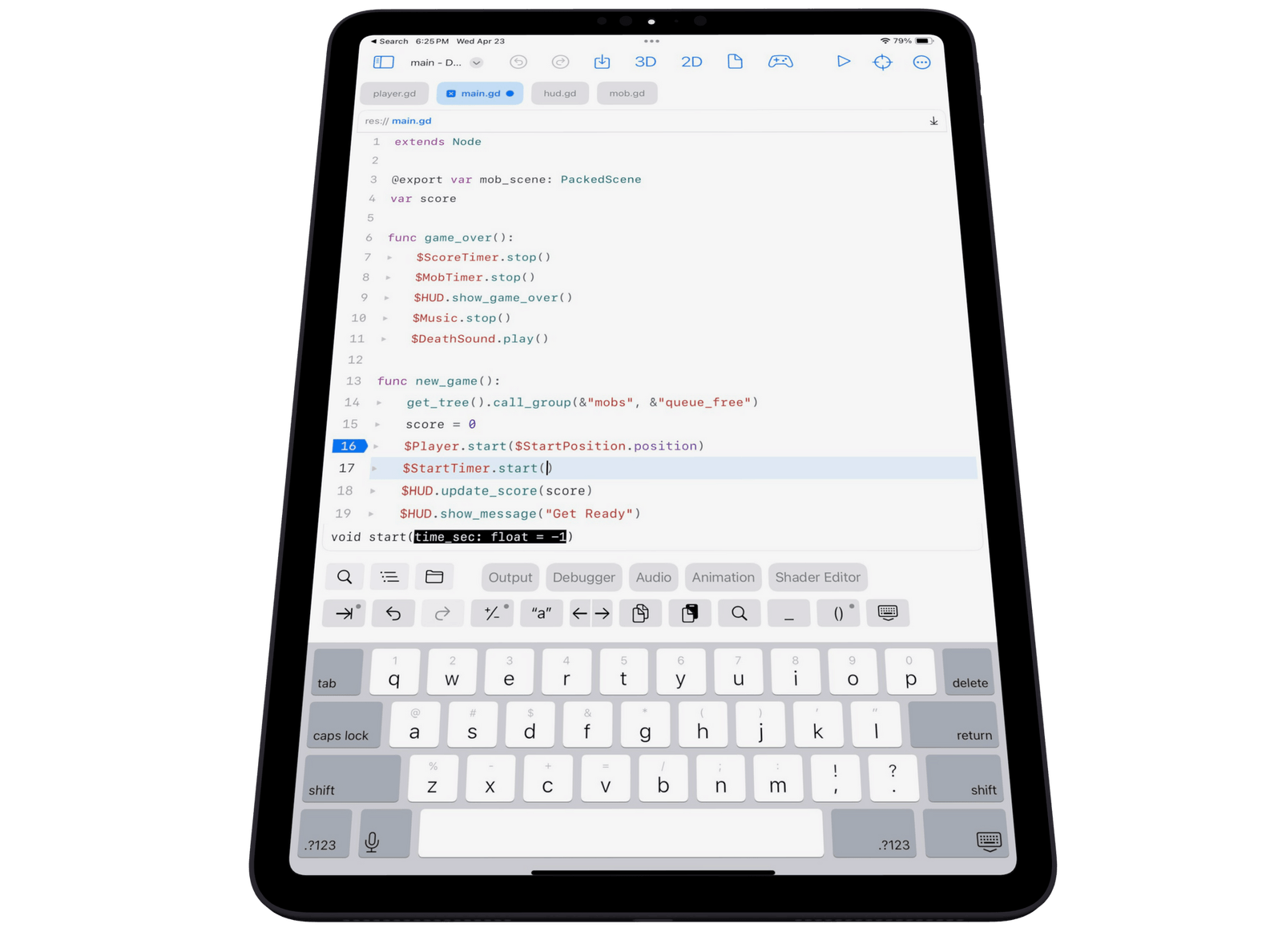
Xogot's code editor is 100% native to enable maximum productivity when composing game logic in GDScript
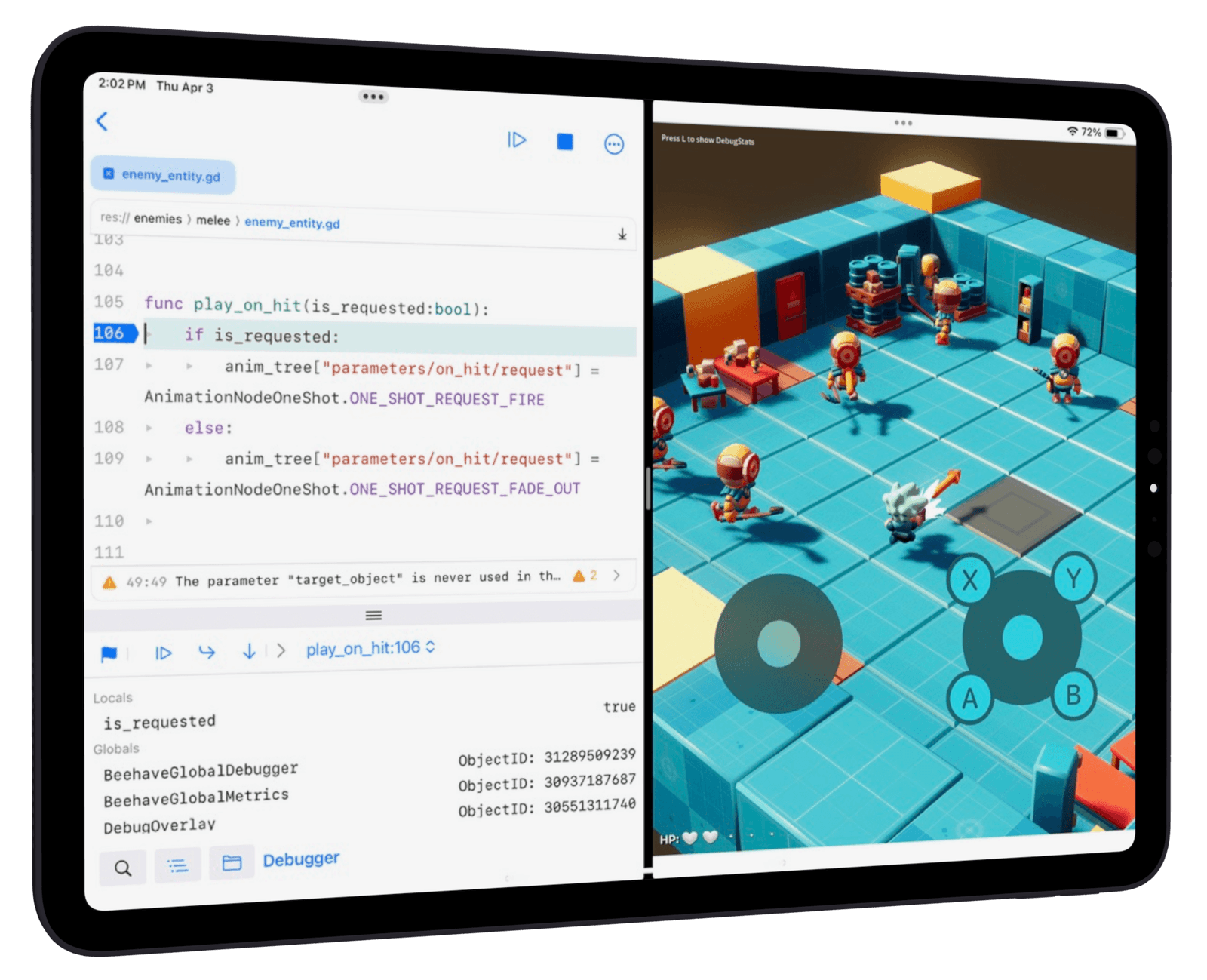
With a fully-integrated debugger, you can set breakpoints, explore your program state and even profile key parts of your game directly on your iPad or iPhone


Export to WebAssembly and share your game with a link — playable in any modern browser, on any device.
Or, use Godot on the desktop to publish to iPhone, iPad, Android, Windows, Steam, consoles, and more.

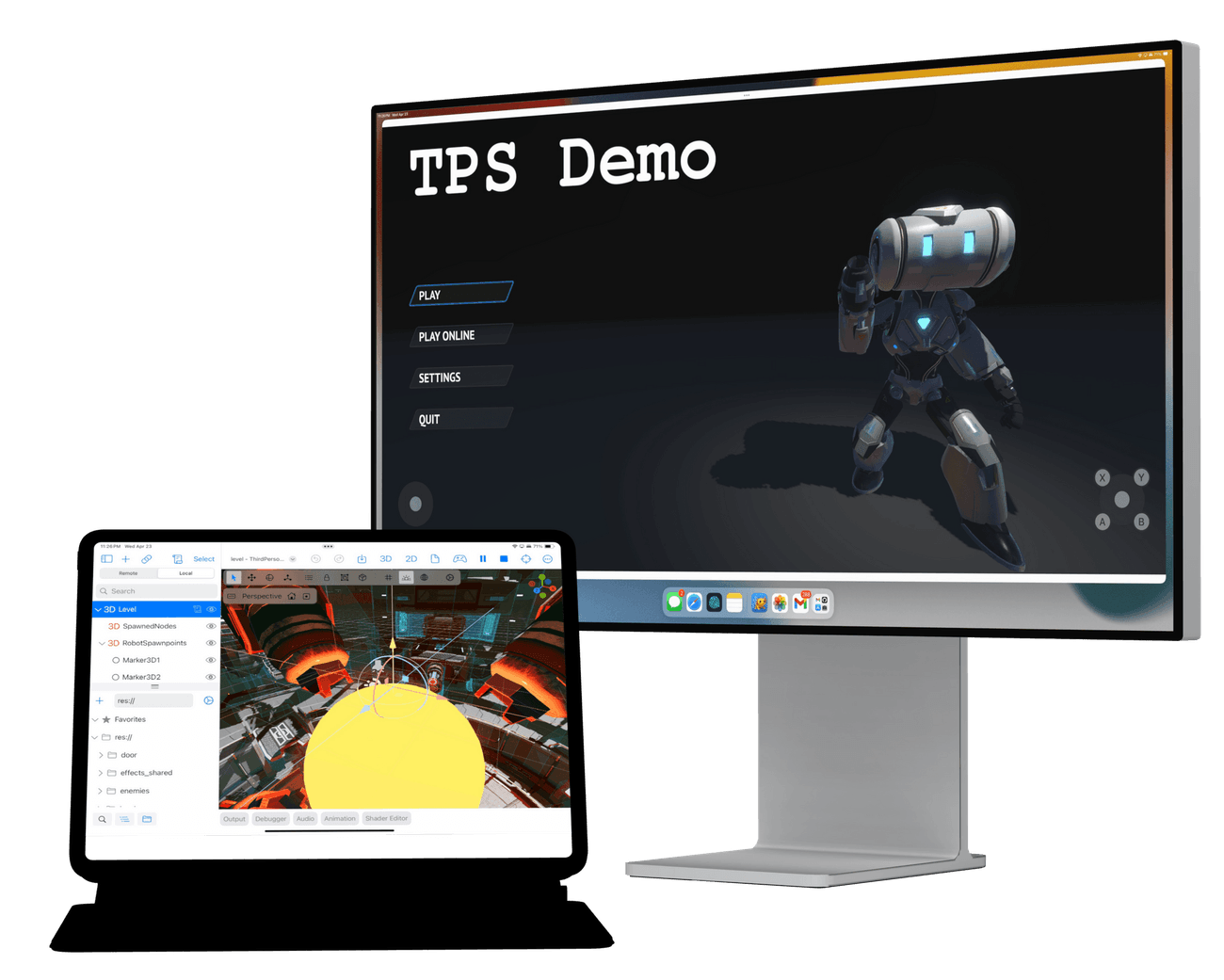
Use Stage Manager to split your work across multiple displays on iPad Pro or iPad Air
Code on one screen, test and design on another.
Arrange windows and tools to suit your style.
Import projects from iCloud, USB drives, or GitHub (via Working Copy) and keep building on the go.

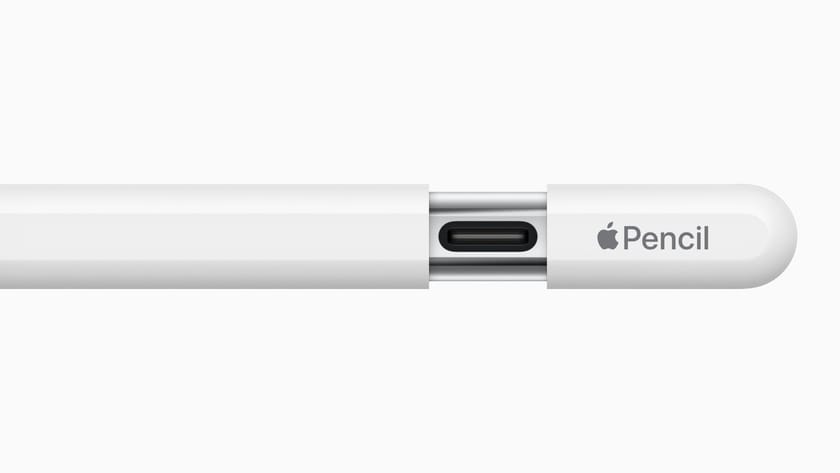
Edit 2D and 3D scenes in fine detail with Apple Pencil
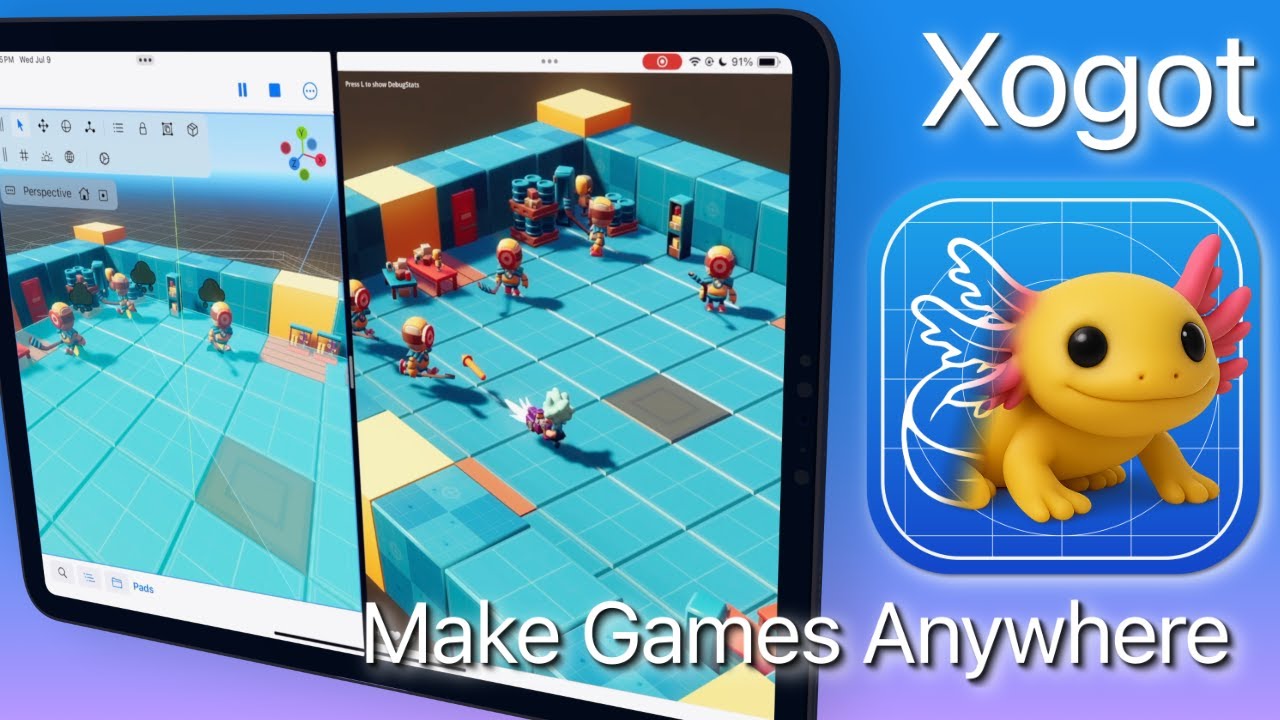
Make Games Anywhere with Xogot
See what’s possible with Xogot, the iPad and iPhone native version of the Godot game engine.
The ZTE MF283U is a versatile 4G LTE wireless gateway that functions as both a mobile modem and a stationary router. While its stock firmware focuses on reliable connectivity, advanced users often look to custom firmware like OpenWrt to unlock deeper management features. Core Connectivity Features The standard firmware provides a robust suite of tools for managing a home or small office network: Multi-Mode Internet Access : Supports 4G LTE (Cat 4), 3G (HSPA+), and 2G connectivity. It can also share a wired internet connection via Ethernet. Integrated Wi-Fi & LAN : Allows multiple wireless clients to connect simultaneously alongside four dedicated Ethernet ports for wired devices. Security Management : Includes built-in WPA/WPA2 encryption, a customizable firewall, and MAC address filtering to control which devices can join the network. WPS Functionality : Features a dedicated hardware button to quickly pair new devices without manually entering passwords. Advanced Management & Customization For those looking to extend the router's capabilities, custom firmware such as OpenWrt can be flashed to enable features not available in the factory software: Automatic Reboot Scheduler : Configure the router to restart weekly (e.g., at 3 AM) to clear cache and maintain performance. Global Ad-Blocking : Integrate services like Pi-hole directly into the router to block malicious domains across all connected devices. Static DHCP Leases : Tie specific IP addresses to device MAC addresses, ensuring critical hardware like servers or smart home hubs never change IPs. VPN Client/Server Support : Secure your entire home network by routing all traffic through a VPN directly at the router level. Updating and Maintenance Keeping the firmware current is essential for security and stability. You can manage updates through the ZTE Device Support page or the router's local admin panel: [OpenWrt Wiki] ZTE MF283plus
The ZTE MF283U is a 4G/LTE Cat.6 router designed for fixed wireless access (FWA), often used for enterprise, home broadband failover, or rural connectivity. Its firmware (which varies slightly by region/carrier branding) provides a detailed set of routing, security, and cellular management features. Here is a detailed breakdown of the ZTE MF283U firmware features.
1. Cellular & WAN Management
4G/3G Fallback: Supports LTE Cat.6 (up to 300 Mbps down) with automatic fallback to 3G (UMTS/HSPA+) if 4G signal is lost. Band Locking: Allows manual selection of specific LTE bands (e.g., Band 3, 7, 20, 28, 40) to force connection to a preferred tower or avoid congestion. APN Configuration: Full custom APN settings for any carrier (including IPv4/IPv6, authentication types PAP/CHAP). Network Mode Selection: Manually select "4G Only," "3G Only," or "Auto." Cell Tower Info: Displays current cell ID, RSRP, RSRQ, SINR, and PCI. Data Roaming Control: Enable/disable data roaming and set roaming warnings. SMS Functionality: Built-in SMS inbox/outbox (can send/receive texts via web UI). Supports SMS forwarding to email or another number. USSD Support: Send and receive USSD commands (e.g., check prepaid balance) directly from the firmware interface. zte mf283u firmware
2. Wi-Fi Features (Dual-Band AC)
Concurrent Dual-Band: 2.4 GHz (802.11n, up to 300 Mbps) and 5 GHz (802.11ac, up to 867 Mbps). Multiple SSIDs: Up to 4 SSIDs per band (main, guest, VoIP, etc.) with separate security settings. WPA/WPA2/WPA3 Support: (WPA3 on later firmware revisions). Also WEP and WPA-PSK. Wi-Fi Scheduling: Set times to automatically enable/disable wireless radios (e.g., turn off Wi-Fi overnight). Client Isolation: Prevent wireless clients from communicating with each other. WPS: Push-button or PIN-based setup. Wi-Fi Roaming Assistance: Option to disconnect weak-signal clients to force reconnection to a better AP (if multiple APs exist).
3. Wired Connectivity & Routing
Ports: 2x Gigabit Ethernet LAN ports (can be configured as LAN or one as WAN for failover). Ethernet WAN Failover: Use a wired broadband connection as backup if cellular fails (active-passive failover). DHCP Server: Customizable IP range, lease time, and static DHCP reservations (by MAC address). VLAN Support: Basic 802.1Q VLAN tagging on Ethernet ports. IP Passthrough (Bridge Mode): Disable NAT and pass the cellular public IP directly to a downstream router (single device only). IPv6 Support: Native IPv6 (DHCPv6, SLAAC) and IPv4/IPv6 dual stack. Static Routing: Add custom routes. RIP v1/v2: Optional dynamic routing.
4. Advanced Security & Firewall
SPI Firewall: Stateful packet inspection with DoS protection (blocks SYN flood, ICMP flood, etc.). IP & MAC Filtering: Allow/block specific IPs or MAC addresses (both inbound and outbound). URL Filtering: Block specific website domains (simple blacklist). Port Forwarding & Triggering: For hosting servers or allowing inbound services. DMZ: Expose a single LAN device to the internet (not recommended unless necessary). VPN Passthrough: PPTP, L2TP, IPSec passthrough (but no built-in VPN server/client in stock firmware). Parental Controls: Time-based internet access restrictions per device. The ZTE MF283U is a versatile 4G LTE
5. Management & Monitoring
Web UI: Accessible at 192.168.0.1 (default) – supports HTTP/HTTPS. Admin Credentials: Default admin / admin or admin / password (strongly recommended to change). Firmware Upgrade: Local file upload (.bin/.zip) or OTA (if carrier supports it). Backup/Restore Configuration: Export settings to a file for backup or cloning. System Logs: View/save logs (debug, security, connection events). SNMP: Basic SNMP v1/v2c for remote monitoring (useful for MSPs). TR-069 (CWMP): Remote management protocol – carriers can push configs/firmware remotely (can be disabled in advanced settings if unlocked). Ping & Traceroute Tools: Built-in diagnostic utilities. SMS Notifications: Alerts for low signal, data limit, or firmware updates.